The post The Ultimate SEO Website Redesign Checklist first appeared on ELMNTL.
]]>
Before embarking on a website redesign, it’s crucial to assess your current SEO standings. Gather the following information and analyze your website’s current scenario:
- website’s traffic
- keyword rankings
- backlink profile
- Content quality
- User engagement (bounce rate, page views per sessions, average session duration)
- Website load speed
- Mobile responsiveness
Use tools like Google Analytics and Search Console to identify what’s working and pinpoint areas that need improvement. If you don’t know how to find this information, no worries. Our team is here to help. You can request a free SEO Audit here!
Understanding your website’s SEO performance sets a benchmark for comparison after the redesign.
Planning for SEO from the Ground Up
A successful SEO strategy always begins with planning. Here are a few bullet points to help you get started:
- Ensure your website’s structure is intuitive and reflects the user’s search intent.
- Create an SEO roadmap
- Do a keyword research
- Create a site hierarchy and metadata strategy.
Align these elements with your business goals and user needs to ensure that the new design is not only visually appealing but also optimized for search engines.
On the technical side, it is important to check on schema markup, canonical tags, and XML sitemaps. These elements help search engines understand and index your website more effectively. Additionally, plan for mobile-first design since Google predominantly uses the mobile version of the content for indexing and ranking.
Ensuring Seamless URL Migrations
During a redesign, URL structure often changes, which can significantly affect SEO if not handled correctly. Develop a URL migration plan to ensure that all old URLs are properly redirected to the new ones using 301 redirects. This preserves link equity and prevents 404 errors, which can harm your SEO performance.
Map out all existing URLs and determine the corresponding new URLs. Use a redirection plugin or modify your .htaccess file if you’re comfortable with code. Remember to update your internal links to point to the new URLs to maintain a good site structure. Post-launch, regularly check for crawl errors in Google Search Console to fix any broken links promptly.
Optimizing Content and Structure for SEO
Content is the cornerstone of SEO. As part of your redesign, review your website’s content and identify opportunities to optimize your content for relevance, quality, and keyword optimization. Here are a few areas to get you started:
- Ensure your headings, titles, and meta descriptions incorporate targeted keywords and accurately reflect the page content.
- Use breadcrumb navigation and logical URL hierarchy. Structurally, your website should facilitate easy navigation for both users and search engine crawlers.
- Optimize images with descriptive ALT tags and compress them for faster loading times.
- Ensure that your website is ADA-compliant to enhance usability for all visitors.
Testing and Monitoring Post-Launch SEO Impact
After launching your redesigned website, it’s imperative to monitor its SEO performance closely. Track the same metrics you assessed before the redesign and compare them to understand the impact of the changes. Look for improvements in rankings, organic traffic, and user engagement.
Utilize A/B testing for different elements such as page layouts, call-to-action buttons, and meta tags to find what works best for your audience. Continuously analyze and refine your SEO strategy based on data-driven insights. Regularly update your content and stay informed about the latest SEO trends and algorithm updates to maintain and improve your search engine rankings over time.
Looking for SEO Experts?
At ELMNTL, we specialize in transforming your website to achieve optimal SEO, Paid Ads, and technical performance. Ready to elevate your online presence with a redesign? Start with a FREE SEO Audit from our expert team. Our SEO specialists are eager to connect with you and strategize the perfect roadmap to your digital success.
The post The Ultimate SEO Website Redesign Checklist first appeared on ELMNTL.
]]>The post Why Embracing Authentic Diversity with the LGBTQ Community Is Needed for Growth first appeared on ELMNTL.
]]>Understanding how to effectively engage with this community is not just a matter of cultural sensitivity but a strategic imperative. The LGBTQ+ population encompasses diverse identities, including non-binary, trans, pansexual, queer, and more. Tailoring marketing efforts to resonate with these unique sub-groups is a sign of respect and a crucial move toward unlocking substantial growth opportunities. This article will scratch the surface to explore why understanding and authentically engaging with these diverse identities matters and how it can lead to significant progress in marketing.
The Rich Tapestry of LGBTQ+ Identities
To truly resonate with the LGBTQ+ community, it is paramount to recognize that it is far from being a singular entity. Instead, it represents a beautifully intricate tapestry of identities, each deserving respect, recognition, and tailored marketing strategies.
Why Does Representation Matter? The Pitfalls of Misrepresentation: Cisgender Actors Playing Trans Characters
One prominent issue in media and entertainment is the casting of cisgender actors in transgender roles. This practice not only limits opportunities for transgender actors but also perpetuates harmful stereotypes. GLAAD’s Studio Responsibility Index reported that only 14% of the major studio releases in 2020 included transgender characters, and none were portrayed by transgender actors (GLAAD, 2021).
A notable example is the controversy surrounding the casting of cisgender actor Eddie Redmayne as transgender artist Lili Elbe in “The Danish Girl.” This decision drew criticism from the transgender community and advocates for authentic representation, highlighting the need for change in the industry. The backlash against such casting choices underscores the growing demand for authentic representation and the importance of casting transgender actors in transgender roles (The Guardian, 2016). And as more people become vocal, rightfully so, brands need to take note and evolve their targeting strategies.
People want to see people from their own communities reflected in entertainment, marketing, and advertising; otherwise, you would have wasted the budget in a failed attempt to target this community.
We share some insights on a few subgroups within the LGBTQ+ community. While this is not an exhaustive list, we hope this article inspires you to ensure you are attempting at accurate representation and not just tokenism.

Non-Binary Individuals: Celebrating the Spectrum
Non-binary individuals represent a vital and diverse segment of the LGBTQ+ community. According to a survey conducted by the National Transgender Discrimination Survey (NTDS), about 35% of non-binary individuals reported experiencing physical assault due to their gender identity. Recognizing this diversity is essential in crafting marketing strategies that resonate with non-binary individuals (NTDS, 2015).
By acknowledging and respecting non-binary identities, brands, especially fashion and retail brands, can create content that affirms the richness of gender identities. For example, a study by Nielsen found that 66% of consumers are willing to pay more for products from brands that demonstrate a commitment to sustainability and social responsibility. This suggests that marketing campaigns that promote inclusivity and diversity can positively impact consumer loyalty and purchasing behavior (Nielsen, 2015).

Transgender Individuals: Empowering Authenticity
Transgender individuals embark on a profound journey of self-discovery, acceptance, and empowerment. According to the U.S. Transgender Survey, nearly one in four transgender individuals have faced discrimination in healthcare settings. Understanding this journey is key to fostering trust and a sense of belonging within this segment of the LGBTQ+ community (USTS, 2015).
For instance, an inclusive beauty brand might collaborate with transgender influencers or activists to highlight products catering to individuals who identify as trans, nonbinary, or still on their journey of self-discovery. A Community Marketing & Insights survey found that 72% of LGBTQ+ consumers are more likely to support companies that advertise to them directly. This underscores the importance of targeted marketing efforts that speak authentically to the transgender community (CMI, 2019).
Pansexual Individuals: Embracing All Love
Pansexuality celebrates love without confining it to the boundaries of gender. Recognizing and validating pansexual individuals affirms their right to love freely and authentically. A study published in JAMA Network Open found that LGBTQ+ inclusive policies and practices in healthcare settings were associated with a 4% increase in patient satisfaction. This demonstrates that inclusive marketing can positively impact consumer experiences and perceptions (JAMA Network Open, 2020).
An example of this inclusivity in action might be a dating app that offers a wide array of gender and orientation options, ensuring that pansexual individuals can connect with potential partners in an environment that respects their unique preferences. The Pew Research Center reported that 30% of LGBTQ+ adults have used a dating app or website, highlighting the significance of inclusive platforms for this community (Pew Research Center, 2020).

Queer Individuals: Navigating Fluidity
Queer individuals embody a fluidity in their sexual orientation and identity. Tailoring marketing efforts to reflect this fluidity allows for more nuanced, inclusive, and relatable campaigns.
According to a survey conducted by GLAAD, 20% of millennials identify as LGBTQ+, demonstrating the significant market potential within this demographic (GLAAD, 2017).
For instance, an entertainment streaming service might curate a diverse selection of content that appeals to the wide range of experiences within the queer community. A study by Nielsen found that LGBTQ+ consumers are 20% more likely to have streamed a show online in the past year, indicating a strong interest in digital entertainment platforms (Nielsen, 2016).
In conclusion, embracing diversity within the LGBTQ+ community is a matter of respect and inclusivity and a strategic move toward growth in marketing efforts.
Moreover, research demonstrates that accurate representation in marketing can have a profound impact on brands:
- According to a study by Kantar Millward Brown, advertisements with diverse and inclusive representations of gender and sexuality are 25% more effective in driving purchase intent (Kantar Millward Brown, 2019).
- The LGBTQ+ consumer market is estimated to have a buying power of over $3.7 trillion globally, as reported by Witeck Communications (Witeck Communications, 2020). Accurate representation can tap into this lucrative market.
- A Nielsen study found that 54% of consumers consider diversity and inclusion as key factors in brand selection, emphasizing the importance of inclusive marketing (Nielsen, 2020).
These statistics underscore the compelling case for brands to prioritize accurate representation in their marketing efforts, particularly when engaging with the LGBTQ+ community.
The post Why Embracing Authentic Diversity with the LGBTQ Community Is Needed for Growth first appeared on ELMNTL.
]]>The post 7 Tips for Planning an Effective Marketing Calendar first appeared on ELMNTL.
]]>Why Your Business Needs a Marketing Calendar
A marketing calendar is essential for any business looking to plan and execute a successful marketing strategy. It allows you to map out your content and promotions in advance, helping you stay organized and on track to achieve your goals. With a marketing calendar, you can ensure that your efforts are aligned with key dates and events and that your content is always relevant and engaging. It also helps you to measure your marketing efforts and adjust your strategy.
Not having a marketing calendar can lead to missed opportunities, ineffective campaigns, and confusion. A marketing plan is vital to staying ahead of the competition and achieving your business goals.
How to Plan an Effective Marketing Calendar
So now you know why you need one, here are some tips for planning an effective marketing calendar:
Set clear goals and objectives
Before you begin planning your marketing calendar, it is essential to have a clear understanding of what you want to achieve. Your goals might include increasing brand awareness, driving sales, or growing your customer base. Once you have set your goals, you can begin to plan a marketing strategy to help you achieve them.
When setting goals, be sure to develop SMART goals. These criteria ensure that the goals set are clear, quantifiable, realistic, and have a defined timeframe for completion.
- Specific: For a goal to be effective, it needs to be clear and specific about what you want to accomplish.
- Measurable: The goal should allow you to track your progress and include metrics to quantify your success.
- Attainable: The goal needs to be realistic and achievable.
- Relevant: A relevant goal relates to your broader business goals.
- Time-bound: You should have a goal deadline with realistic timing.
Consider your target audience
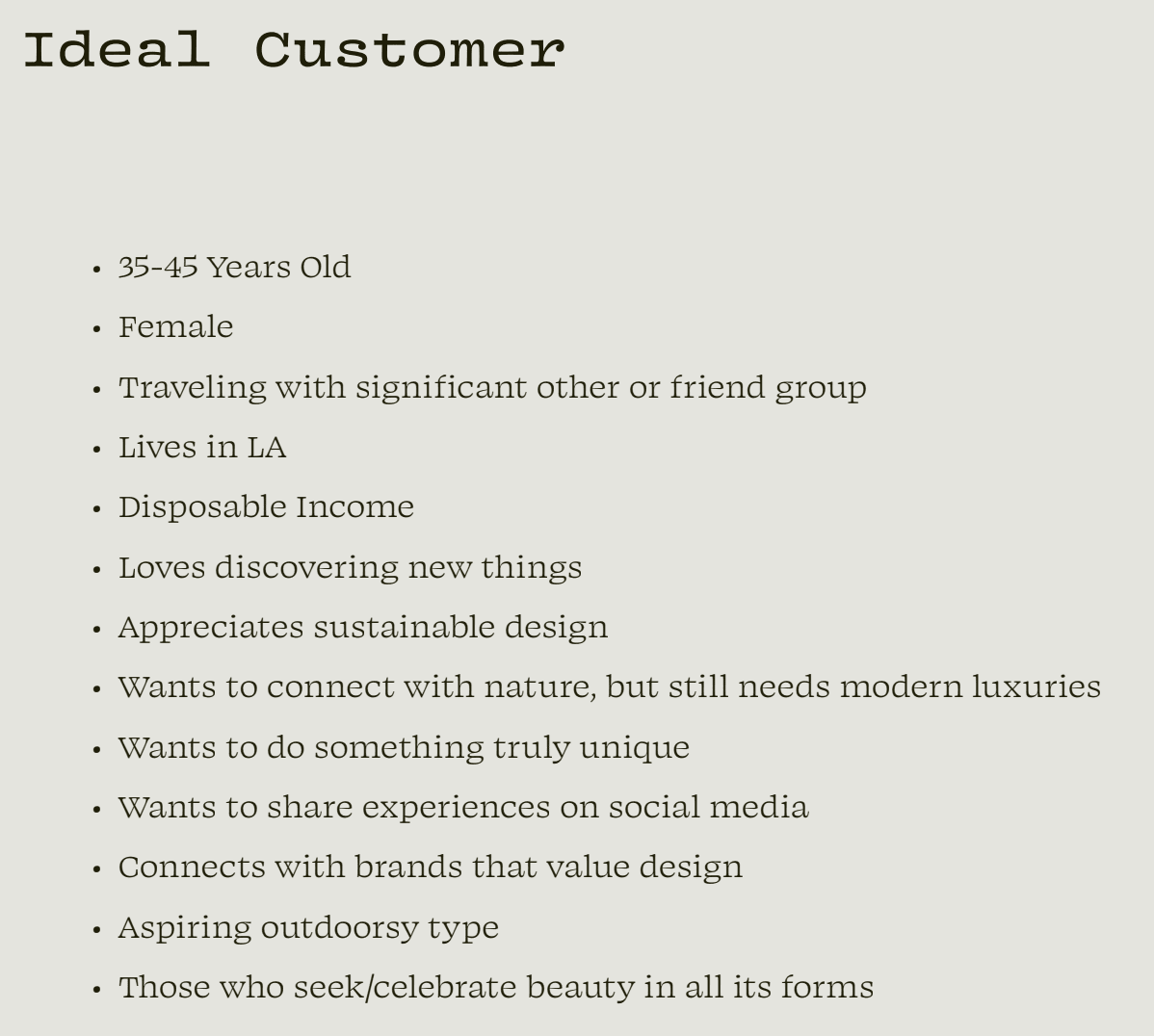
Your marketing calendar should be tailored to the needs and interests of your ideal customer. Consider your audience’s demographics, psychographics, and behavior, and plan your campaigns and promotions accordingly.
Knowing your audience allows you to create content that specifically resonates with them and encourages them to take the desired action, whether it be signing up for a newsletter, sharing a social post, or making a purchase.
Use a mix of marketing tactics
A marketing calendar should include a mix of tactics because it allows for a more comprehensive and well-rounded approach to reaching potential customers. Different tactics, such as email marketing, social media campaigns, and paid media, can appeal to different audiences and target specific goals.
Using a mix of tactics also helps to mitigate the risk of relying on a single strategy, which could be affected by changes in the market or consumer behavior. Additionally, it allows tracking the performance of each tactic and adjusting it accordingly to optimize the results. Overall, a mix of tactics in a marketing calendar can lead to better results and a more successful marketing strategy.
Schedule around key dates
It’s a good idea to schedule your marketing campaigns and promotions around critical dates, such as holidays, industry events, and product launches. By planning your campaigns around these dates, you can take advantage of the increased attention and interest that they generate.
For example, if you have a restaurant that serves burgers, you can create hype and increase sales by planning promotions around fun holidays like #NationalCheeseburgerDay.

Make use of analytics
Analytics can help you track the effectiveness of your campaigns and promotions and make data-driven decisions about future marketing efforts. Your analytics can track important metrics such as website traffic, conversion rates, and social media engagement. You can then use this data to inform your future marketing plans.
If one tactic was wildly successful, consider allotting more resources to that tactic for future marketing campaigns. On the other hand, if a specific tactic falls flat, there is no need to waste time on one that did not work in the past.
Flexibility is key
Marketing plans are subject to change, so keep your calendar flexible. Stay open to new ideas and be ready to adjust your plans when needed.
One of the most talked about marketing tactics still today was when Oreo won the Super Bowl marketing in 2013 with a last-minute tweet that capitalized on the game’s blackout that year. Their flexibility allowed them to tap into a cultural moment in real time, and the brand instantly went viral.
Review and adjust
Regularly reviewing and adjusting your marketing calendar is important because it allows for flexibility and adaptability in response to changes in the market, consumer behavior, and the performance of previous tactics. Without regular review and adjustment, a marketing calendar may become outdated and fail to reach its target audience effectively.
Additionally, reviewing and adjusting the calendar allows for identifying and correcting any underperforming tactics and incorporating new and innovative strategies.
Take a look back at your marketing goals from 2020, and you will likely understand how quickly and unexpectedly business goals can change and how important it is to have the ability to adjust.
Final Thoughts
Creating a marketing calendar can initially seem daunting, but with these tips in mind, you can develop a plan to help you achieve your marketing goals. Remember to stay flexible, track your progress and make adjustments as needed, and you’ll be on your way to a successful marketing calendar that will help you crush your goals this year.
If it sounds too overwhelming to manage on your own, connect with our marketing strategy experts today to get a custom marketing calendar tailored to your business goals and objectives for 2023.
The post 7 Tips for Planning an Effective Marketing Calendar first appeared on ELMNTL.
]]>The post Global Travel Demand Remains Strong in Q1 2023: Expedia Group Reports first appeared on ELMNTL.
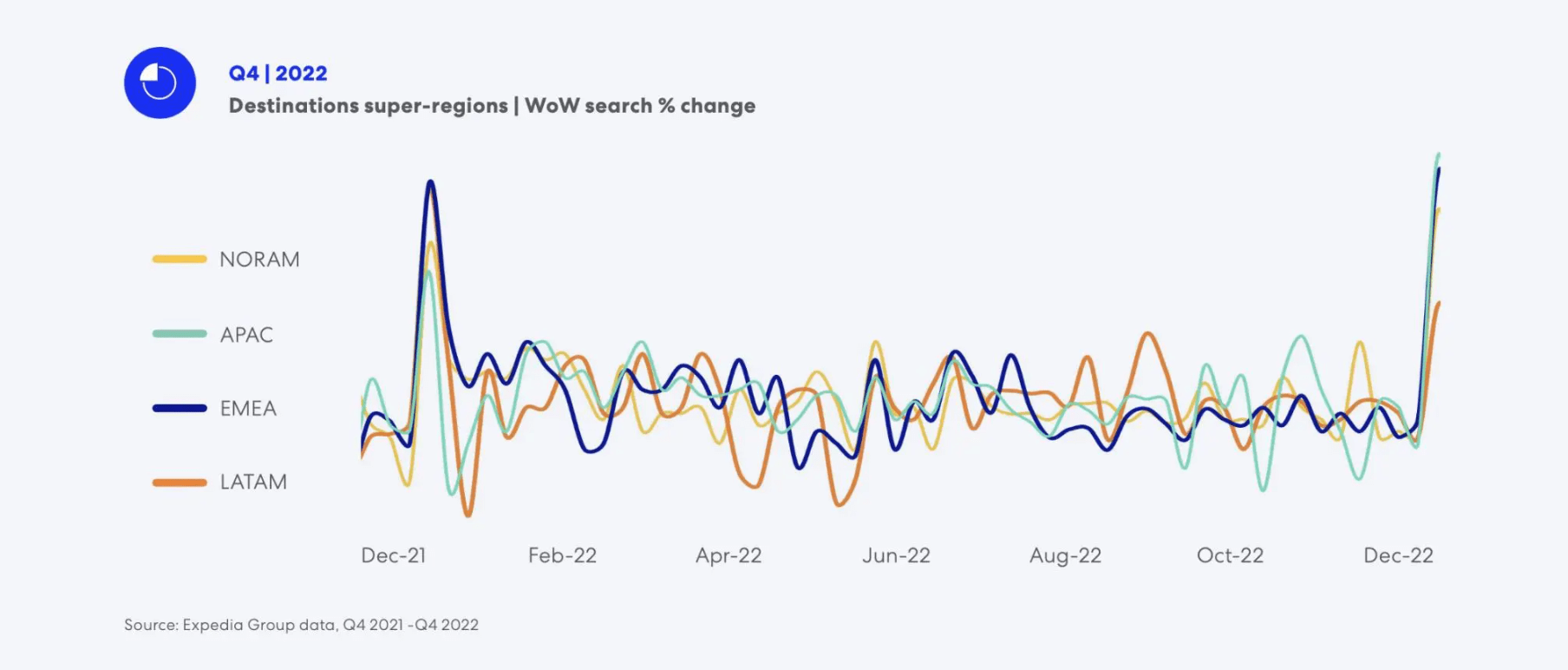
]]>The report reveals that search volumes for travel increased by 10% year-over-year (YoY) globally in the last quarter of 2022. Asia Pacific (APAC) drove much of this growth, as the easing of travel restrictions in China, Hong Kong, Japan, and Taiwan led to increased search volumes. The report indicates that people have become more confident about traveling as they have started planning their trips earlier for 2023.
Global Search Volumes
Overall, traveler intent remains strong, as evidenced by Q4 2022 search volume data. During Q4 2022, 35% of searches were for travel in 2023, representing a 55% YoY increase. Based on first-party data from Expedia Group, the report aims to inform partners and provide insights into shifting traveler intent and demand. The report includes custom research based on hundreds of millions of searches on Expedia Group websites worldwide.
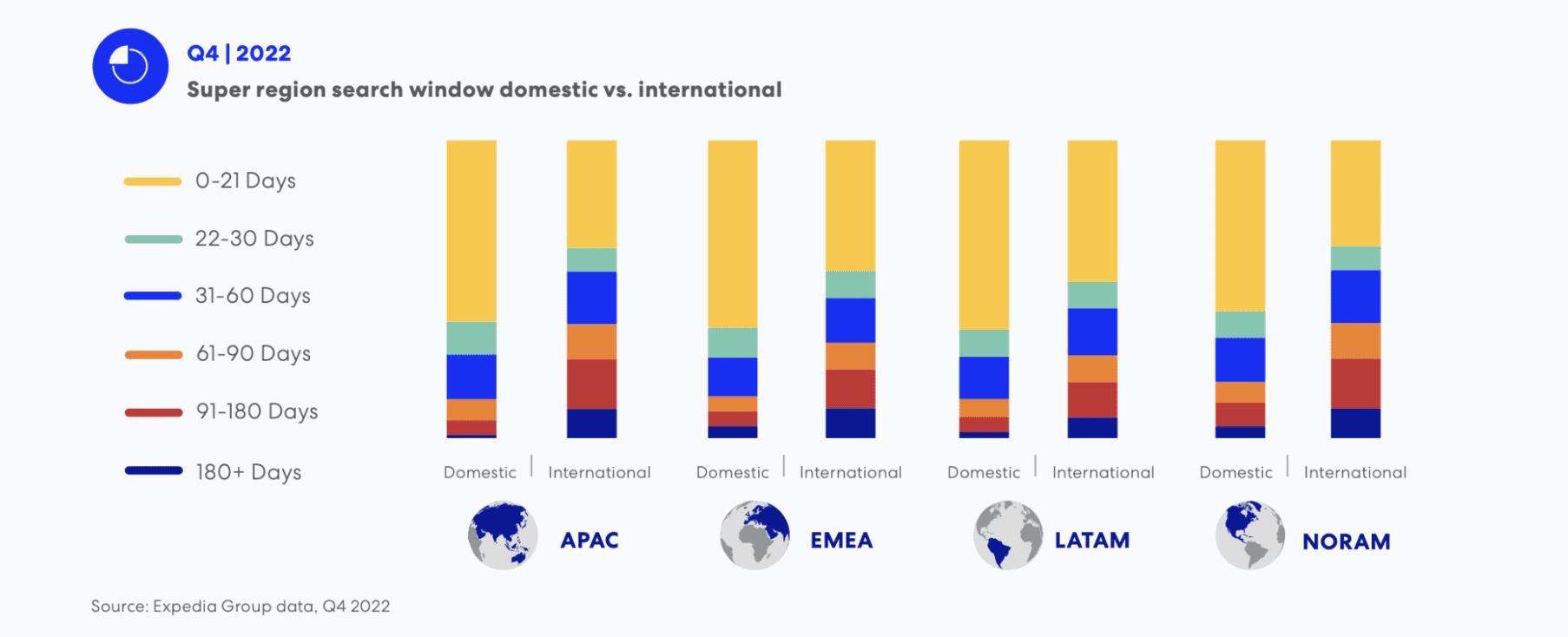
The report shows that the 180+ day search window had the most substantial growth in search share quarter-over-quarter (QoQ), with a 20% increase globally, driven by a 60% QoQ growth in EMEA. The 61- to 90-day search window also saw a nearly 15% QoQ growth globally, with double-digit growth in APAC and NORAM. The 31- to 60-day search window increased by 5% QoQ, led by growth in APAC and NORAM. LATAM travelers are still planning in the short term, with the most growth seen in the 0- to 60-day search windows, up 5% QoQ.
Domestic Search Volumes
Regarding domestic search volume, most global domestic searches fell within the 0- to 30-day window. However, global domestic search for the 180+ day window increased by almost 35% QoQ, driven by growth in both EMEA and NORAM. APAC domestic search share in the 31- to 90-day window increased 10% QoQ, while LATAM markets saw the most growth in search share in the 0- to 21-day and 31- to 60-day search windows. Comparing Q4 2022 to Q4 2019, the domestic search share in the 61- to 90-day window increased nearly 20%, while the 22- to 30-day window saw a 10% increase.
The report also highlights the increase in last-minute holiday searches during December, with searches in the 0- to 21-day window increasing more than 10% month-over-month (MoM). This could be due to weather and airline challenges in NORAM, which impacted thousands of flights during the last two weeks of December and into the new year.
Destination Choice
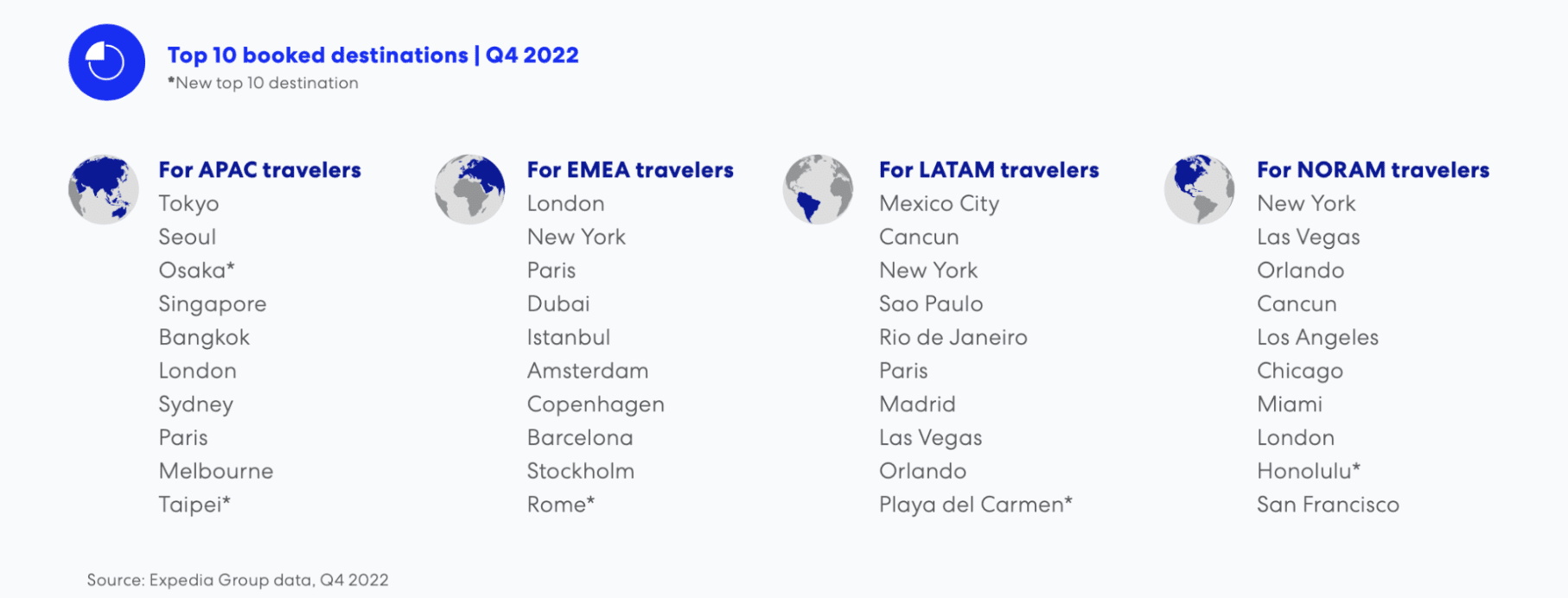
During Q4 2022, beach and city destinations remained popular due to various factors, such as relaxed travel restrictions in the APAC region, holiday travel, and the allure of warm weather destinations. The global top 10 list of destinations showed only slight alterations from the previous quarter, with New York, Las Vegas, and London continuing to dominate as the leading super regions. Tokyo debuted on the list, Orlando and Cancun rose in the rankings, and Miami surpassed Boston to claim the 10th spot. Similar travel patterns were observed in Q4 2021, as travelers in the Northern Hemisphere sought to escape the cold weather with warm weather getaways.
Conclusion
Expedia Group Traveler Insights Report provides valuable insights into the shifting traveler intent and demand as the travel industry navigates the pandemic. The report shows travelers are becoming more confident about traveling and planning their trips for 2023. The increase in last-minute holiday searches suggests that people are keen to travel despite external challenges. Travel companies and agencies must be aware of these trends and adapt their strategies to meet customer demands.
If your brand is ready to take advantage of the increased interest from travelers in 2023, connect with our travel and tourism marketing experts. We will work with you to create a marketing strategy to get visitors to your destination.
The post Global Travel Demand Remains Strong in Q1 2023: Expedia Group Reports first appeared on ELMNTL.
]]>The post 7 Top Web Design Trends for 2023 first appeared on ELMNTL.
]]>First Impressions Matter
Did you know that half of consumers believe a business’s website design is an essential reflection of the brand? This crucial first impression makes it necessary to constantly evaluate your brand’s digital presence and the current trends to meet changing consumer demands.
2023 Web Design Trends
Follow along as we explore some of the top web design trends for 2023 and how you can incorporate them into your website design.
1. Responsive Design
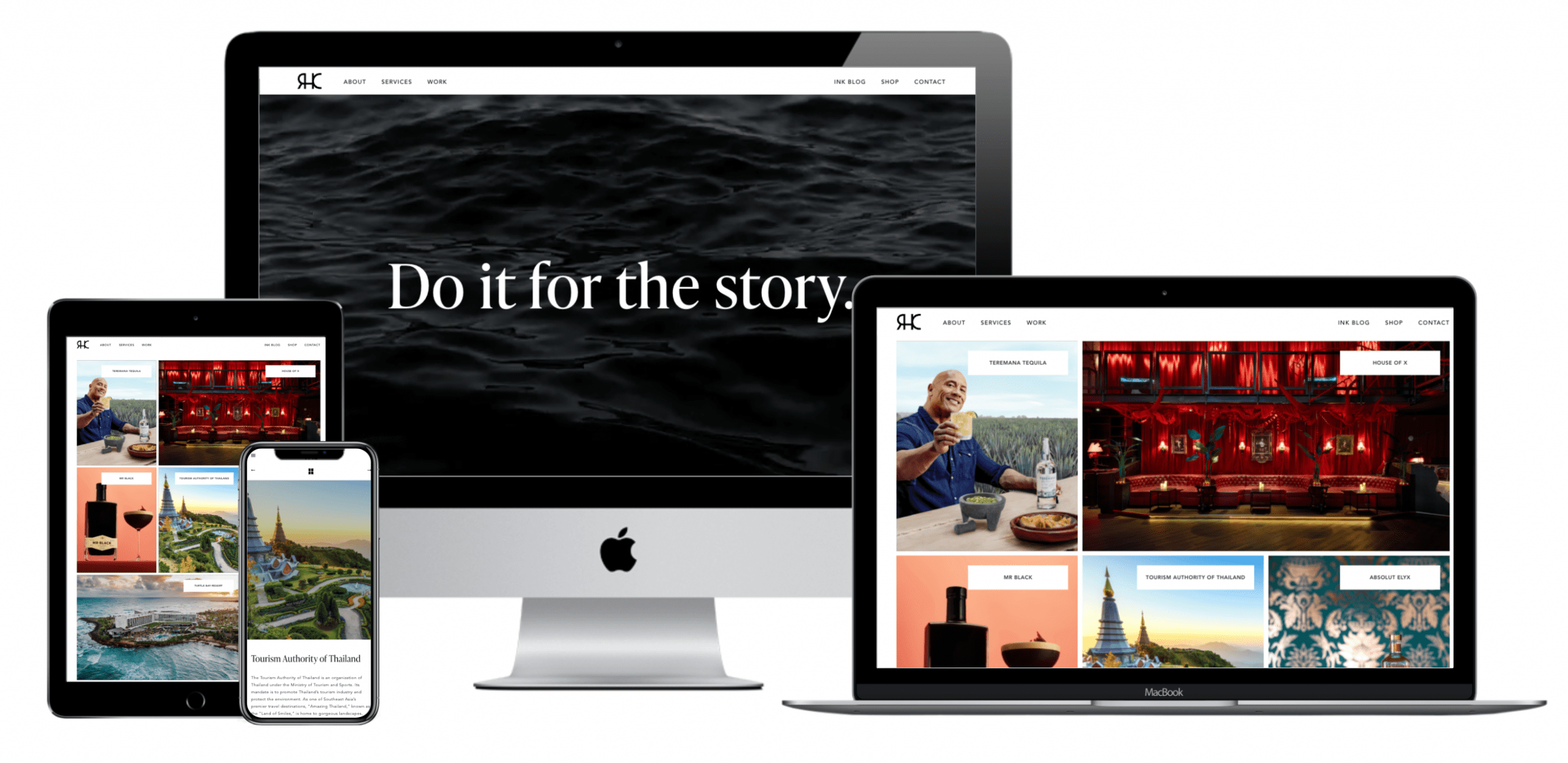
Responsive design has been a key trend in web design for a few years, and it’s not going anywhere anytime soon. With the proliferation of mobile devices and the increasing importance of search engine optimization (SEO), your website must look and function just as well on a smartphone as on a desktop. In fact, 84% of current U.S. website users are on mobile devices, and by 2026 it is projected that 303.6 million people will access the internet on mobile.
To accommodate all users and devices, your website design should use flexible layouts, images, and other elements that adjust to fit the size and orientation of the user’s device.
2. Accessibility
Regarding accommodating all users, accessibility is becoming increasingly important in web design. Accessibility refers to the ability of a website to be used by people with disabilities, such as visual impairments or mobility issues. By designing with accessibility in mind, you can create a website that is inclusive and usable by a wider range of people. This can involve using appropriate color contrasts, providing alt text for images, and using HTML tags to structure content.
In 2023, it is more important than ever for a website to be accessible to all users, regardless of their abilities or disabilities. Accessibility ensures that everyone can access the information and services provided on a website and also promotes inclusivity and diversity, which are important values in today’s society. Furthermore, in the U.S. and many countries, accessibility legislation and guidelines are in place, and not following them can result in legal issues.
3. Minimalist Design
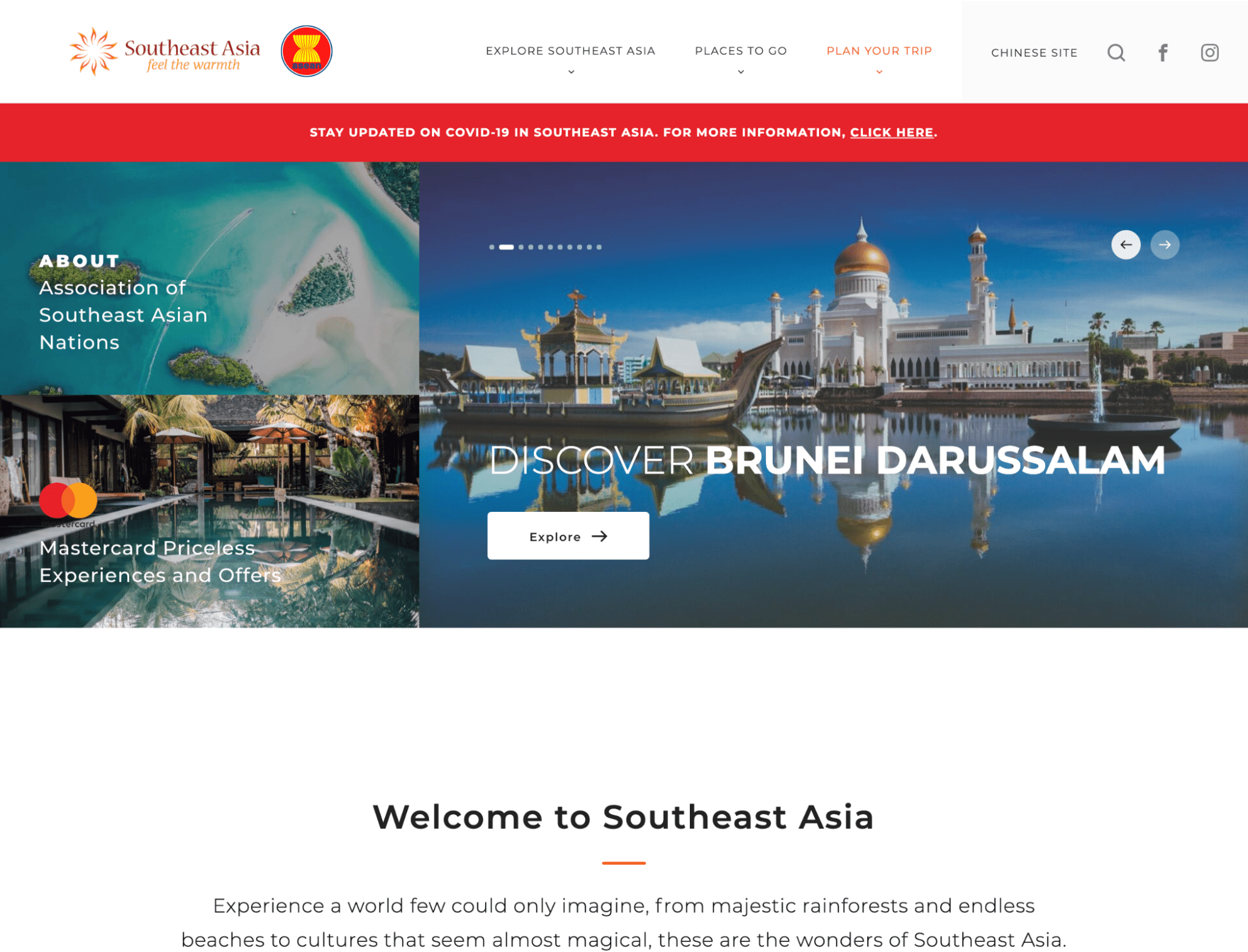
Minimalist design is all about stripping away unnecessary elements and focusing on simplicity and usability. This trend is particularly popular for mobile devices, where screen real estate is at a premium. Using simple, clean layouts and focusing on the most critical elements, your brand’s website can be easy to navigate and look great on any device.
4. Asymmetrical Layouts
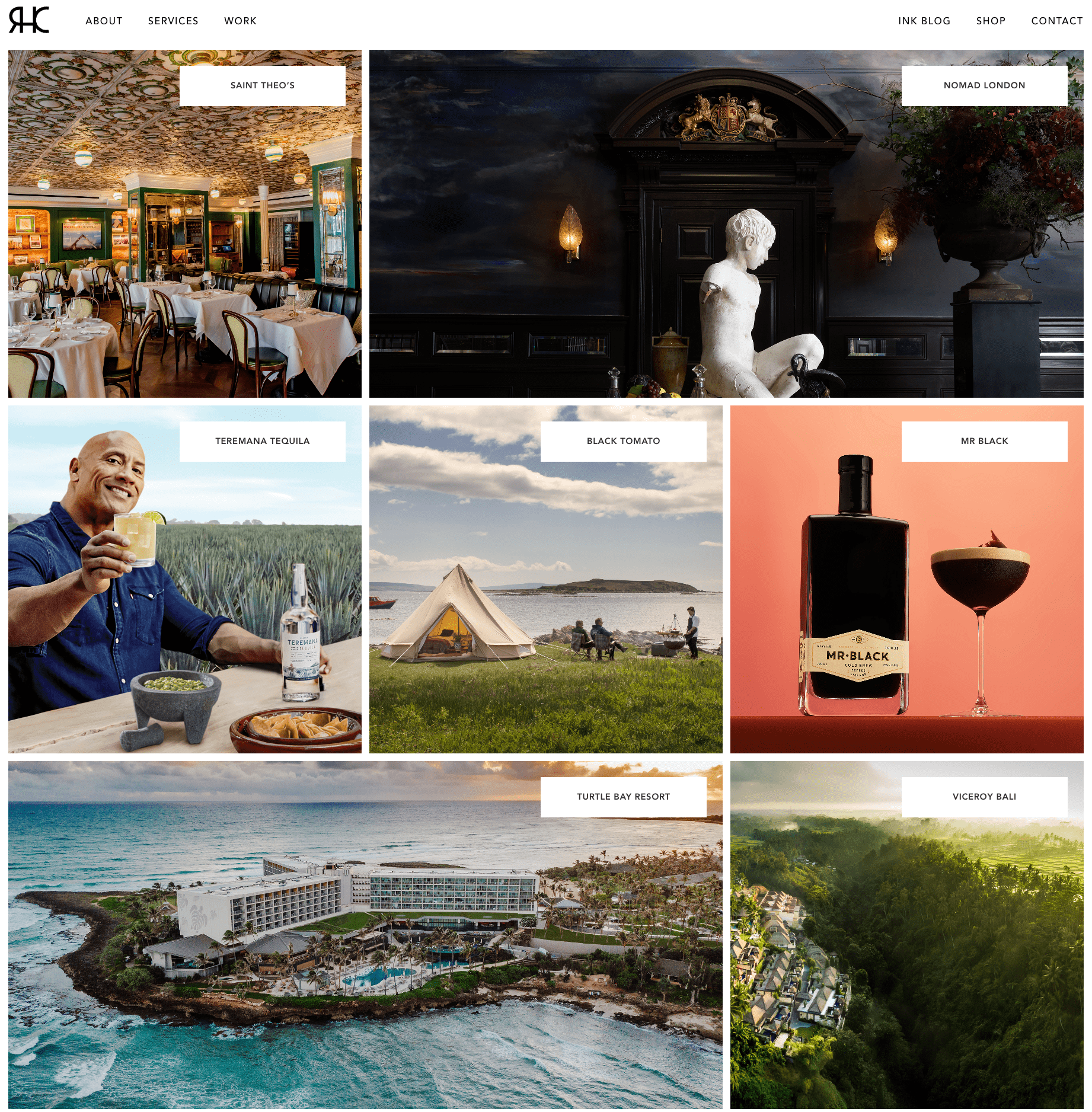
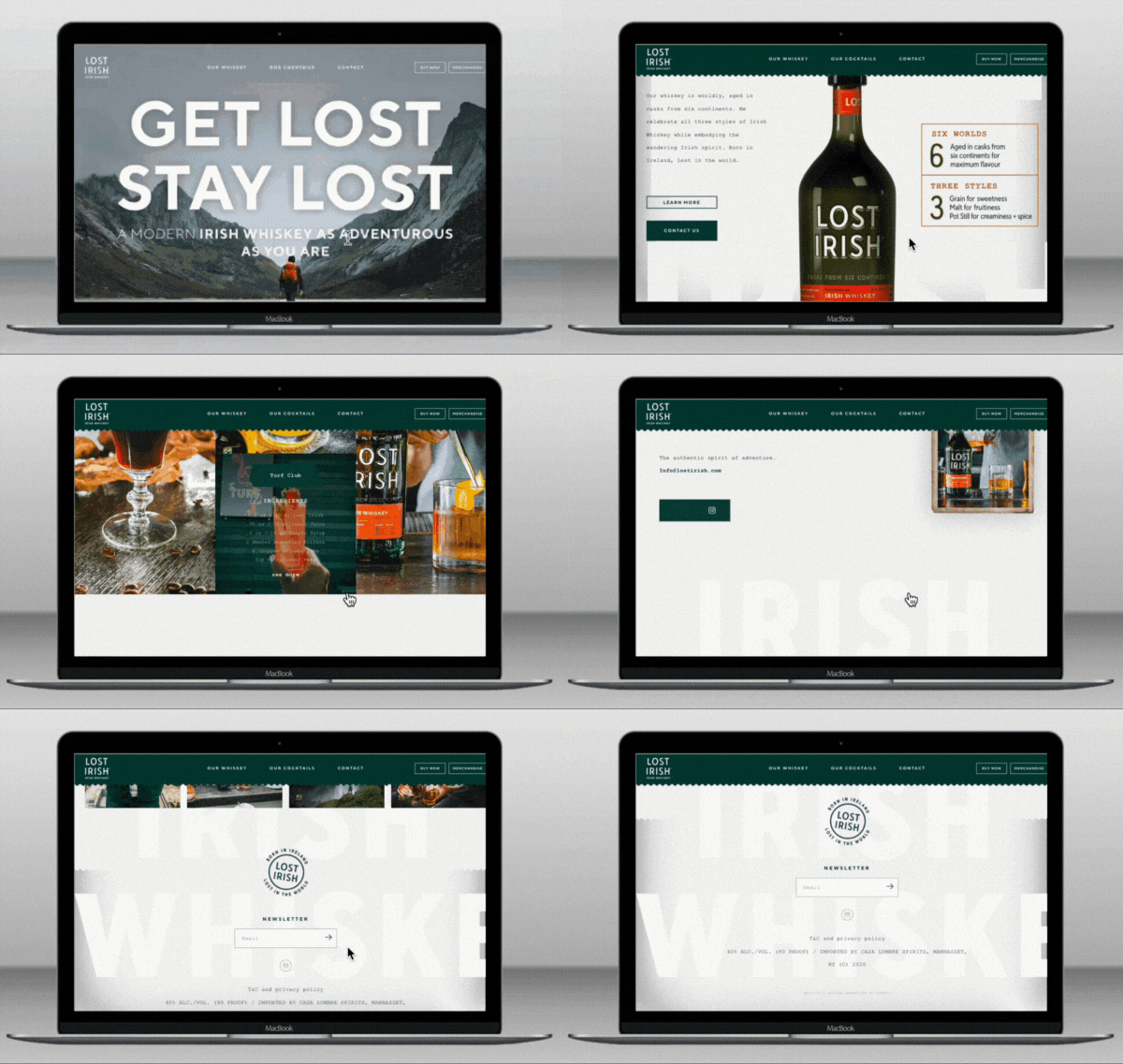
Asymmetrical layouts, also known as “broken grid” layouts, involve placing elements on the page in a way that doesn’t follow a traditional grid structure. This design trend can create a more dynamic and visually attractive design and be a great way to stand out in a crowded online landscape.
Just be sure to balance your asymmetrical layout with enough negative space and consider the hierarchy of your content to ensure that it’s easy to read and navigate.
5. Bold Colors and Gradients
While minimalism is still popular, we also see a trend toward bold, eye-catching color palettes. We can achieve this by using bold solid colors or gradients, adding depth and visual interest to a design. Just be sure to use color sparingly and consider how it will work with your overall brand identity.

6. Microinteractions
Microinteractions are small, interactive elements on a website that serve a specific purpose. This can include things like hover effects, loading indicators, and notifications. Adding microinteractions to your website can make it feel more dynamic and engaging for users. Just be sure to use them sparingly and only when they serve a specific purpose to avoid overwhelming your users.

7. Parallax Scrolling Effects / Motion Graphics
A parallax scrolling effect is when the background of your website moves at a different speed than the content in the foreground, creating the illusion of 3D.
Motion graphics, on the other hand, are basically animated graphic designs. They can include video animation but are much less complex than animation. They also play for a shorter duration than animation would and have limitations on how the animation itself moves, but they are much more affordable than animation.
Best of all, statistics have shown that businesses can increase their engagement by up to 80% by using motion graphics on their website!
Get Started
As you can see, there are a lot of exciting trends shaping the world of web design in 2023. By incorporating some of these trends into your website design, you can create a modern, effective, and engaging online presence for your brand.
If your brand’s list of goals for 2023 includes updating your website, feel free to explore some of these web design trends as you prepare for a new web design project. Just be sure to consider how each trend fits with your overall brand strategy and goals, and reach out to ELMNTL’s award-winning web design and development team to get started!
The post 7 Top Web Design Trends for 2023 first appeared on ELMNTL.
]]>The post The Rise of Bleisure Travel and How Tourism Brands Can Capitalize on the Trend first appeared on ELMNTL.
]]>As a result of this trend, tourism brands and destinations can take advantage of the bleisure travel trend by promoting packages and services online that cater to the needs of both business and leisure travelers.
What is Driving the Bleisure Travel Trend?
Here are a few of the recent trends driving the bleisure travel trend we are seeing.
Remote Work
One of the biggest drivers of bleisure travel is the rise of remote work. With more and more companies allowing their employees to work from anywhere, it has become increasingly common for people to extend their business trips to include some leisure time. This arrangement will enable them to explore a new city or country while still being able to fulfill their work obligations.
Experiential Travel
Another factor contributing to the upsurge of bleisure travel is the growing interest in “experiential” travel. People are increasingly looking for unique and memorable experiences when they travel, and bleisure travel allows them to combine the opportunity to explore a new place with the ability to conduct business.
Affordable & Convenient Travel Options
The rise of bleisure travel is also driven by the growing availability of affordable and convenient travel options. Online travel booking platforms and apps have made it easy for people to plan and book their trips, while budget airlines and vacation rental properties have made it more affordable for people to add a leisure component to their business trips.
How Tourism Brands Can Capitalize on the Bleisure Travel Trend
If your destination is interested in capitalizing on the bleisure travel trend, here are some ideas you can explore.
Offer Package Deals
Tourism companies can capitalize on the bleisure trend by offering package deals that combine hotel accommodations, transportation, and meeting or event spaces. These packages could also include leisure activities such as tours, activities, or excursions designed to appeal to both business and leisure travelers.
Customized Travel Experiences
Tourism brands can make the most of the new bleisure travel trend by offering customized experiences for business travelers. These experiences could include arranging specialized tours or activities related to the traveler’s industry or expertise.
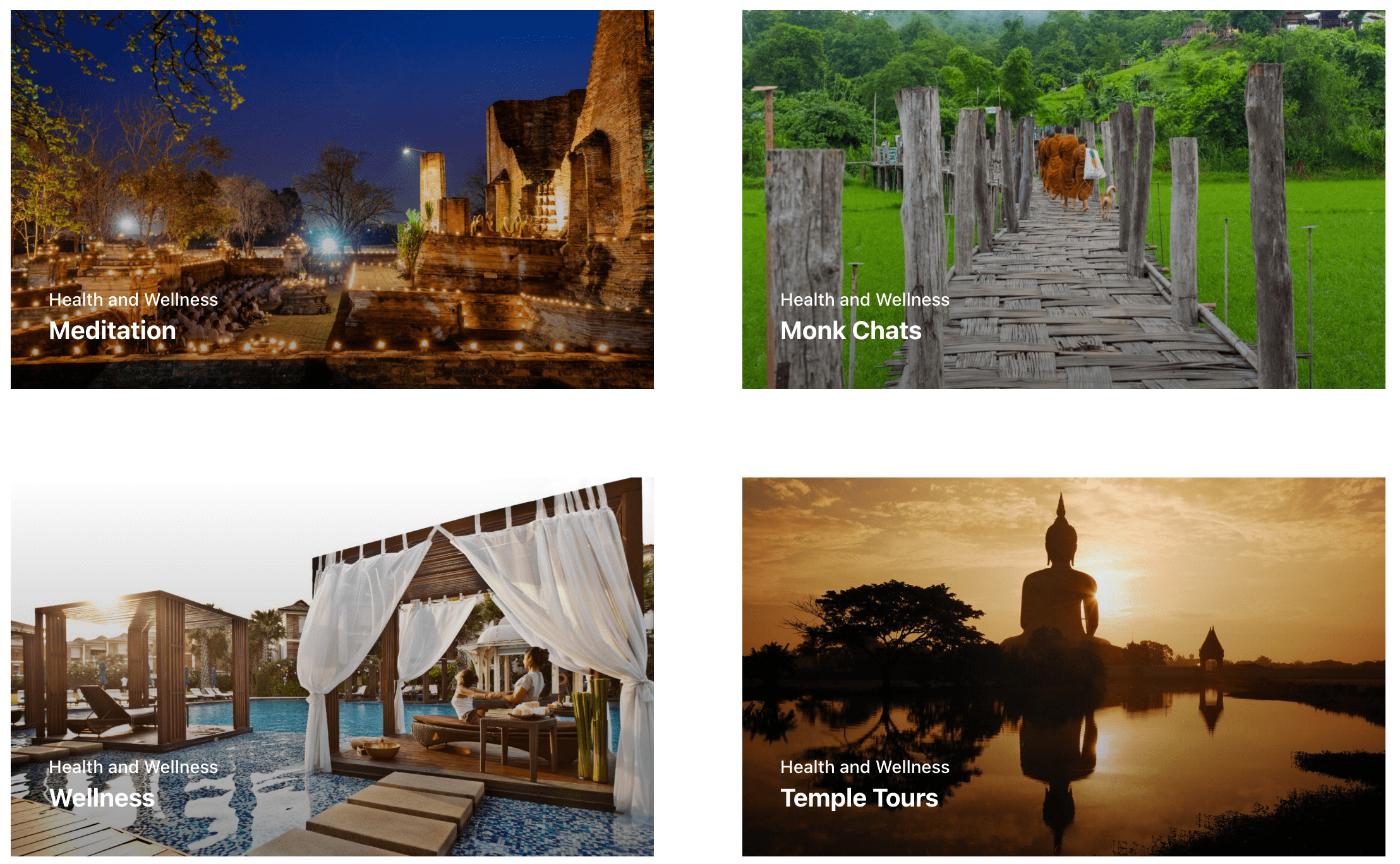
If your destination is known for its health and wellness experiences or unique cuisine, offer special packages that explore these interests. This type of tailored experience can make business trips more valuable and memorable for travelers and make them more likely to return to leisure travel.
Perks & Discounts
Tourism destinations can also benefit by offering special perks and discounts to bleisure travelers. For example, you can offer discounts on dining, shopping, or entertainment to those who book a bleisure package or provide early check-in or late check-out at hotels to help bleisure travelers make the most of their trip.
Bleisure Travel Marketing Opportunities
Now that you have enticing packages, experiences, and discounts in place to target bleisure travelers, you need to start marketing your offerings to your target audience. Here are some ideas to get you started.
Promote Bleisure Travel Packages on Your Website
Tourism brands should include bleisure travel packages on their website. By providing potential visitors with a website design featuring a one-stop-shop solution, destinations can make it easy for travelers to plan and book their trips. Additionally, tourism brands can promote their bleisure tailored offerings in their social media marketing or paid advertising to reach a wider audience.
Provide Valuable Content About Belisure Travel
Blogging about the top attractions, dining, and experiences in your destination city is another way to promote bleisure travel. Not only does it give potential travelers an idea of what they can expect during their trip, but it also showcases the unique offerings of your city and sets it apart as a desirable travel destination. By providing valuable and informative content, you attract and engage with a wider audience, which can lead to increased tourism and more business for local hotels, restaurants, and attractions in your area. Writing about these topics also allows your destination to position itself as a travel expert and build a strong online presence, boosting your credibility and reputation as a top travel destination for bleisure travelers.
Partner with Influencers in Your Destination
Consider partnering with a digital nomad on social media traveling in your market for an effective influencer marketing campaign to expand that audience even more. Leverage popular social media platforms such as Instagram, YouTube, and TikTok to reach a wider audience with engaging social media posts from popular influencers. Influencers can create content that showcases the benefits of bleisure travel, such as combining work and play and share it with their followers.
Instagram Influencer campaign for Thailand Insider
Attract a New and Growing Market
In summary, the bleisure travel trend is a growing trend that allows tourism brands and destinations to increase revenue by promoting package deals, customized experiences, and special perks and discounts. By understanding the needs of bleisure travelers and catering to them, tourism brands can attract a new and growing market and drive repeat business in the long term.
If your tourism brand or destination is looking to get in on the booming bleisure travel trend in 2023, follow these tips or contact our team of tourism marketing experts to get you set up for success.
The post The Rise of Bleisure Travel and How Tourism Brands Can Capitalize on the Trend first appeared on ELMNTL.
]]>The post Why Brands Need to Use Caution with AI-Generated Content first appeared on ELMNTL.
]]>
Artificial Intelligence (AI) is rapidly changing how we do business, including content creation. Many agencies and brands are embracing AI-generated content as a way to save time and increase efficiency.
ChatGPT AI Limitations
However, as AI technology advances, brands must be careful about using AI-generated content and understand its limitations.
Who’s brand is this anyway?
One of the main limitations of AI-generated content is that it cannot use your company’s brand voice and add personality to the writing. The AI algorithms used to generate content are based on patterns and algorithms that cannot truly understand the nuances of language, tone, and brand voice. This means that AI-generated content may lack the personal touch essential to connecting with your target audience and building a relationship with them.
Remember all that time and effort that went into creating a brand guide for your business that outlines your brand strategy, including your unique brand personality, story, and voice? It’s crucial to maintain consistency with your brand; an AI bot simply cannot take that into consideration like a real person who has studied your brand guide. You absolutely cannot sacrifice your brand voice for cheap and fast content creation.
No personal touches
Additionally, AI-generated content lacks the creativity and unique perspective human writers can bring to the table. A well-written email, blog post, or social media update can convey a company’s values and mission, build trust with customers, and inspire them to take action. These qualities are difficult to replicate with AI-generated content, and brands must be aware of this limitation when considering AI technology.
Our job as marketers is to tell a story rather than string words together. Your customers should recognize your brand content before seeing a logo or brand name. Your content needs to have a personal touch in order to build a relationship with customers.
Inaccurate information
AI-generated content can be inaccurate because it is generated based on patterns and associations learned from vast amounts of text data. However, these patterns can lead to the spread of misinformation if the data used to train the AI model is outdated or incomplete. Additionally, AI models can struggle to understand context and nuances, generating content that lacks coherence or is semantically incorrect.
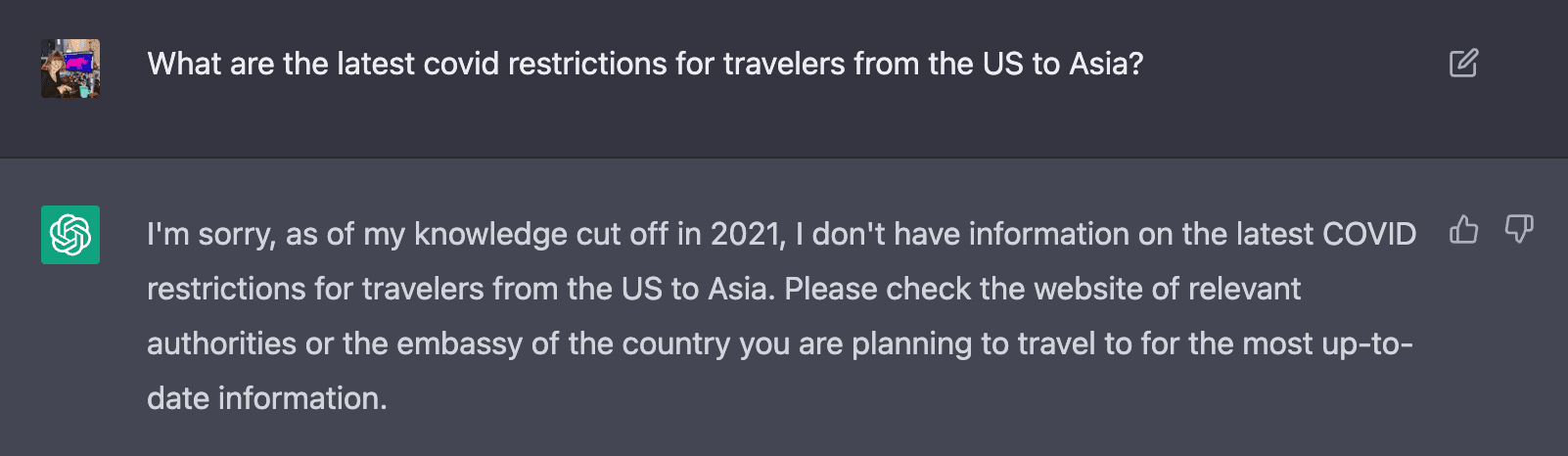
While AI technology is constantly evolving, the accuracy of the information it provides still needs more work. OpenAI, the company behind ChatGPT, claims the accuracy of the data set has improved, however, it is still using a dataset from 2021. If you are in an industry that needs to share the latest updates with your customers, ChatGPT and other AI tools may not be able to provide the most up-to-date and correct information.
Lack of diversity
Finally, AI algorithms are only as good as the data they are fed. If the data used to train the AI model is biased or lacks diversity, the AI-generated content may reflect these biases and perpetuate harmful stereotypes. This is a significant risk for companies, as it can harm their reputation and alienate potential customers.
Without human oversight, AI-generated content can perpetuate harmful stereotypes and reinforce biases. Therefore, it is essential to consider AI-generated content’s limitations and potential inaccuracies and supplement it with human verification and correction where necessary.
Be Cautious with AI-Generated Content
While AI technology has many benefits, brands must be cautious when using AI-generated content. AI-generated content may lack the personal touch, uniqueness, and creativity essential to connecting with customers and building relationships. Brands should carefully consider the limitations of AI-generated content and balance its benefits with the risks, including the potential for lack of creativity and personalization and inaccurate or even biased content.
Tips for using AI-generated content
All of this is not to say that you should not use AI-generated content at all. You just need to be cautious about how you use it. Here are a few ways we’ve found AI-generated content to be helpful:
- Create a list of blog post titles for a content marketing calendar
- Develop email marketing subject lines to test
- Turn an article into five separate social media posts
- Use ChatGPT to provide you with market research
- Automate writing e-commerce product descriptions
Next Steps
If you need help with a marketing strategy that outlines your brand identity, personality, and voice to keep messaging consistent across platforms, contact the branding experts at ELMNTL. Suppose you already have a well-defined brand guide and are ready to get started with content, social media, and email marketing. In that case, you will also need a content writer that understands how to write content specifically for your brand that will resonate with your target audience. Chances are, you will still need a human to do so. Contact the human copywriters at ELMNTL to get started today.
The post Why Brands Need to Use Caution with AI-Generated Content first appeared on ELMNTL.
]]>The post Social Media is Replacing Search Engines; Here is How to Prepare first appeared on ELMNTL.
]]>In fact, a Google executive recently suggested that around 40% of younger generations turn to TikTok and Instagram rather than Google Search or Maps when seeking out local businesses.
Google exec suggests Instagram and TikTok are eating into Google’s core products, Search and Maps https://t.co/B2D4q4fl8x by @sarahintampa
— TechCrunch (@TechCrunch) July 12, 2022
@TechCrunch: Google exec suggests Instagram and TikTok are eating into Google’s core products, Search and Maps
Why the Shift to Social Media from Search
People are making the shift from searching on search engines to social media for a variety of reasons.
Convenience
There are several reasons for this shift. For one, social media platforms are often more convenient and user-friendly than search engines. It’s easier to ask a question on social media and get a quick response from a friend or community rather than sifting through search results and trying to determine which sources are reliable.
Personalization
Social media algorithms are becoming increasingly sophisticated at personalizing content and serving up information that is relevant to an individual user. This means that people are more likely to find what they’re looking for on social media without having to do as much digging.
Social Proof
Another factor driving the shift toward social media is the growing importance of “social proof.” When we see that other people are sharing or recommending something, it adds to the credibility of the information and makes us more likely to trust it. It is particularly true when the recommendations come from people we know and trust.
Engagement
Finally, social media platforms offer interactivity and community that search engines can’t match. When we ask a question on social media, we can get feedback and converse with others. This engagement makes the experience of finding information more social and enjoyable.
How Business Can Prepare for the Shift from Search Engines to Social
For businesses, this shift in consumer behavior means that it is more important than ever to have a strong presence on social media. Here are some ways that your brand can prepare for the shift to social media as the new search engine:
1. Build your presence
Make sure your brand has a presence on multiple social media platforms. While being present on leading platforms like Facebook and Instagram is essential, it is also worth considering expanding to other platforms that may be relevant to your target audience.
If your target audience skews younger, you should explore TikTok. On the other hand, if video is central to your marketing efforts, building a solid presence on Youtube would be valuable.
2. Show your personality
Use social media to showcase your brand’s personality. Social media marketing is great for letting your brand’s personality shine through. Use your social media profiles to showcase your brand’s values, mission, and culture.
If your business still needs to develop a brand guide, check out our blog on what goes in a brand guide and why every brand should have a strong one.
3. Optimize for search
Just like traditional search engines, optimizing your social media profiles is essential. Using keywords relevant to your products or services, location, and industry-specific terms is critical. You also want to include links to your website, blog, and other relevant information.
Regularly updating your profile with relevant and engaging content can also help improve your search visibility. For example, your business should post regularly about new products or services, industry news, and promotions.
4. Invest in influencer marketing
Develop an influencer marketing campaign that is relevant to your target audience. Investing in influencer marketing can boost your brand’s visibility on social media.
By partnering with influencers in your industry or niche, you can tap into their existing audience and gain access to a new, engaged audience. For example, if your brand sells skincare products, you could partner with a beauty influencer who has a large following on Instagram and YouTube. The influencer could create sponsored posts or videos featuring your products, which their followers would see.
Example influencer partnership for Thai Select USA on Instagram
5. Use social media advertising
While organic reach can be limited, paid advertising on social media allows you to reach a larger audience and target specific demographics more easily.
Have you ever noticed after searching online, whether on search engines, social media, or an ecommerce site, that you almost immediately start to see advertisements promoting products like the one you just searched? This is due to retargeting ads that trigger based on your recent search activity.
Example social media retargeting ad for Cinzia Spa
6. Engage, engage, engage
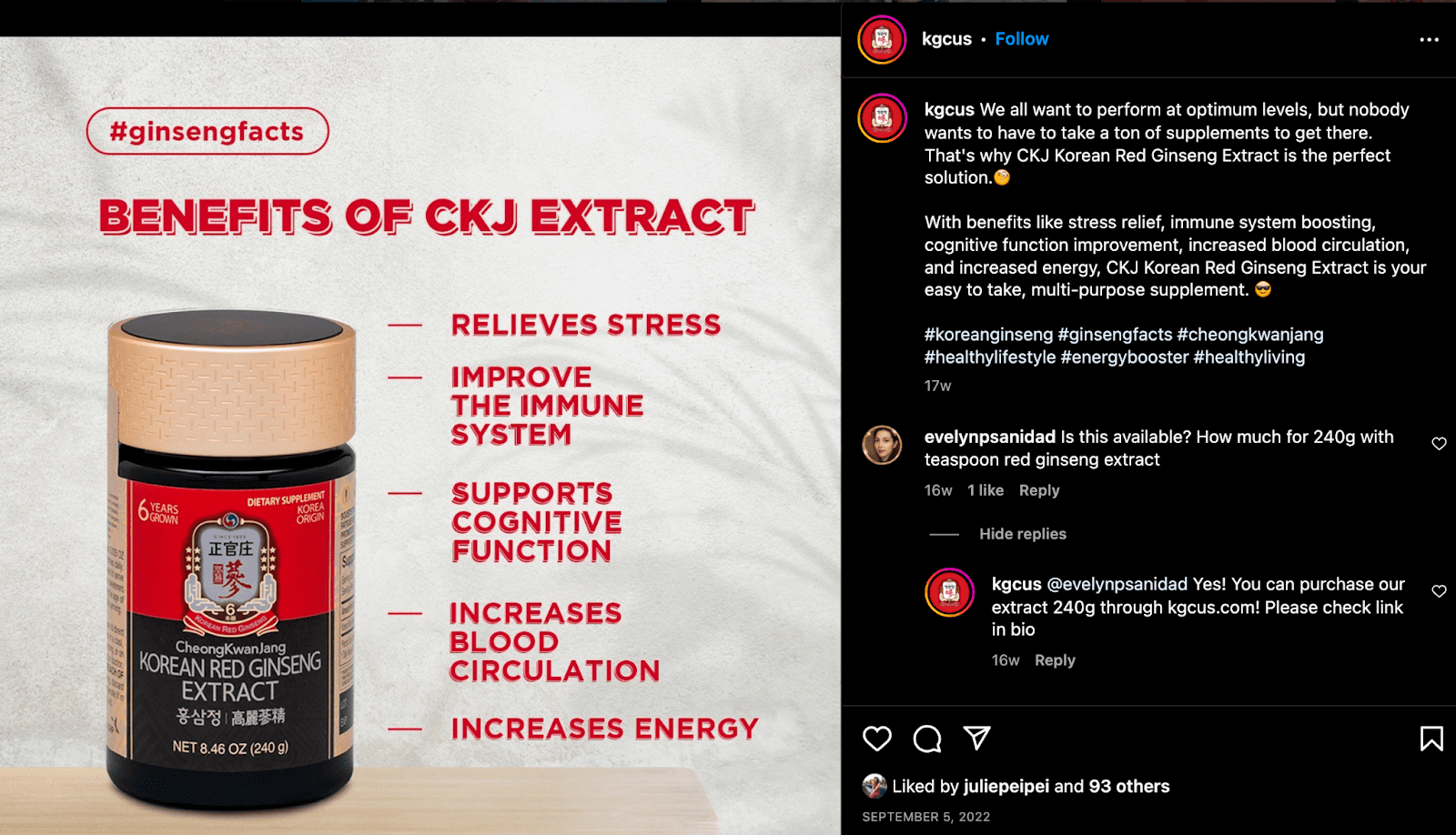
We can’t say it enough, engage with your audience on social media. Social media is about promoting your products or services and building relationships with your audience. Respond to comments and messages, ask for feedback, and create content that will spark conversations with your followers.
For instance, if a follower asks how they can find your product, you need to show up and respond with helpful information so they can easily make a purchase and convert from a follower into a fan.
Moving Forward
By following these tips, your brand can prepare for the shift to social media as the new search engine and effectively reach and engage with your target audience on these platforms.
Overall, it’s clear that social media is becoming an increasingly important source of information for many people. While search engines will likely always have a place in the information-seeking process, businesses and organizations need to have a strong presence on social media to reach their audience and stay relevant in today’s digital landscape.
Make 2023 the year your brand levels up your social media to prepare for these shifts in consumer behavior. If your brand needs help with your social media strategy plan, contact our team to get you set up for success.
The post Social Media is Replacing Search Engines; Here is How to Prepare first appeared on ELMNTL.
]]>The post Creating a Brand Guide: Essential Elements and Benefits for Your Business first appeared on ELMNTL.
]]>While most business owners are familiar with a business plan, they may not be as familiar with a brand guide. A brand guide is not a business plan but a guide that explains how you want your business to communicate to the world. It includes your brand guidelines such as logos, brand colors, brand fonts, and even your brand’s personality.
A brand guide is helpful because it keeps all of your brand’s core values in one place. This can not only help you stay organized, but it can also help your marketing team stay on-brand and consistent when presenting your business to the world.
Brand Consistency is Key
So, why is a brand guide so important? A brand guide helps you keep your brand identity and messaging consistent across all platforms. Customers take comfort in familiarity. In fact, maintaining brand consistency across all platforms, such as social media, your website, and your blog can improve your sales by 23%.
Maintaining consistent branding further creates familiarity with your brand. Whether succinct and to the point, educational in tone, or cheeky and fun, customers and followers will better understand your brand through your established brand identity and voice.
Another benefit of consistent branding is your customers’ emotional connection to your brand. In fact, according to Adobe, when customers become emotionally tied to your brand, they spend, on average, about 67 percent more on your product or service than new customers!
What Goes in A Brand Guide
Here are the essential elements to look for in a brand guide to help keep your brand consistently “on-brand.”
Logo
The first step to creating a brand identity is having a professionally designed logo for your business. You want your logo to be used in all of your communications. Whether on your website or blog, in your newsletters, in advertisements, and more, you want your logo to be seen. A good logo will create instant brand recognition (think of the Mcdonald’s golden arches or the Amazon arrow) and set the tone for your brand.
You should have several variations of your logo as well. This can be tailored to your specific type of communication, as some communications may not need the full logo. Great examples include smaller logos for social media profiles and icons or the same logo in black/white or alternate colors.
Brand Colors
Your brand colors are important, too, and should carry forward your overall brand look and feel. For example, if your brand color palette includes muted colors to convey a feeling of peacefulness and calm, use those colors on your website, marketing materials, Instagram posts, and blog images.
When choosing your brand colors consider color psychology. Color psychology is the way colors influence consumers’ feelings about a brand. For example, the Lyft logo is a bold hot pink with white text. This is no coincidence. Lyft chose this color combination to convey that they are woman-friendly, meaning they not only encourage women to drive for them, but that they also want female passengers to feel safe with their drivers.
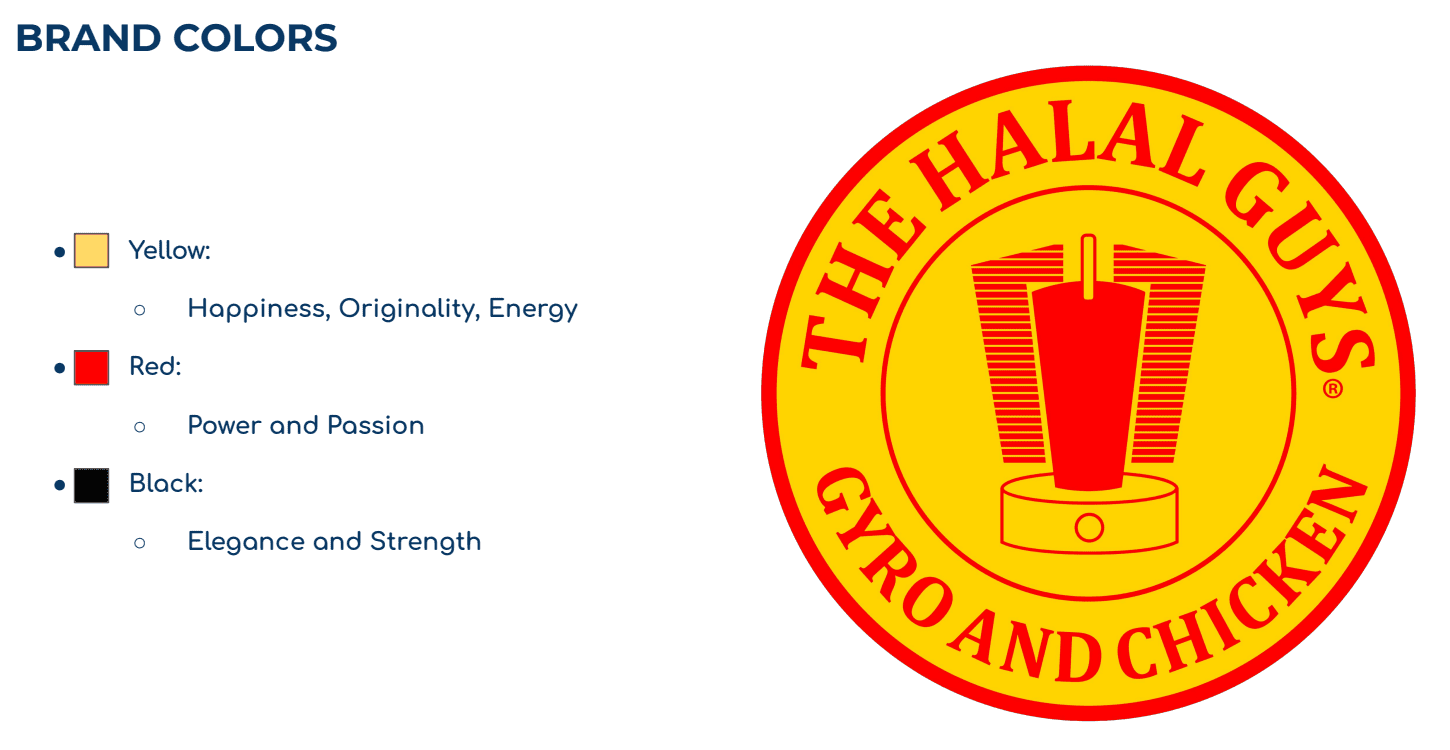
Another example of color psychology in marketing is the Halal Guys logo, which is red and yellow. Many fast food restaurants use red and yellow in their logos, because studies have shown that yellow encourages the appetite, while red evokes passion for the product or brand. Thus, your customer will crave your food when they see this color combination.
Furthermore, studies have shown that customers are more drawn to a brand or logo when it stands out from its background. This not only draws the eye to the logo, it makes the logo more easily recognizable, which is the goal of having a logo in the first place.
Your marketing team can help you determine a color palette that not only stands out, but that uses color psychology to evoke the emotions you want customers to feel about your brand.
Typography
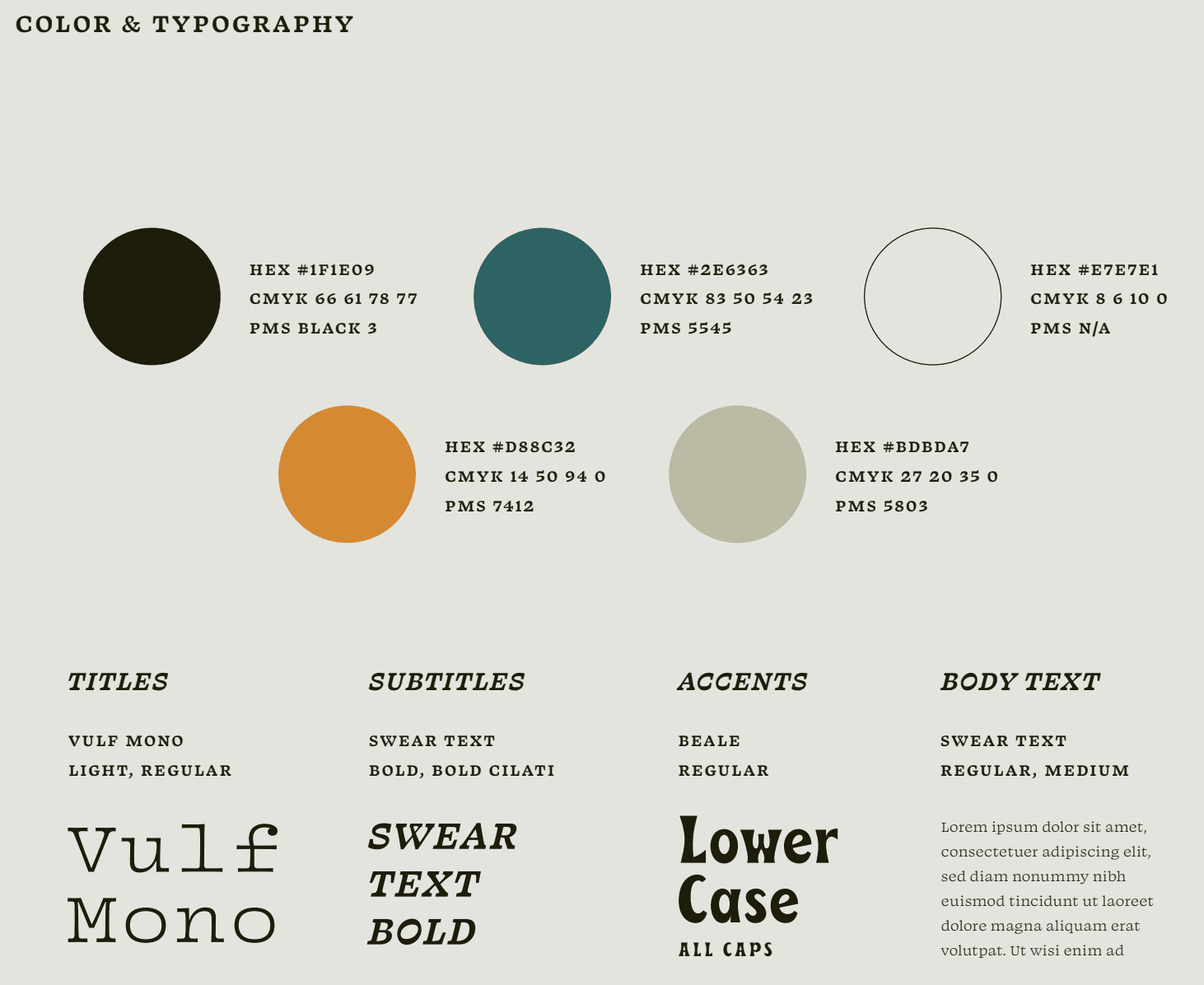
Another essential element to creating your brand guide is the fonts you choose. Take your time to work with designers when selecting your brand fonts, as you don’t want your text to look dated or generic (no comic sans!).
Secondary fonts for headers and accents are also necessary and should be displayed consistently throughout your marketing materials and website. Once your marketing team helps you find your brand fonts, your team will use them across all mediums for consistency in building your brand.
Tagline
At ELMNTL, our tagline is “More Than Just An Agency, A Force of Nature.” This ties in with the word “elemental,” but it also conveys the feeling of strength and power. You want your tagline to be something short and easily remembered. Another excellent example of this is Nike. The Nike “swoosh” is one of the most recognizable logos in the world, as is their tagline “Just Do It.” In fact, if you were to see someone wearing a t-shirt that said “Just Do It,” even without the swoosh logo, you would likely instantly know that it is a Nike brand shirt.
Brand Message
Your brand’s message is another vital element of your brand guidelines. Your brand’s message begins with your mission statement. Your mission statement is a simple sentence that explains your brand’s purpose, which ties into your business’s purpose and the feelings you want your business to evoke.
Brand Story
Equally as important as your brand message is your brand story. Your brand story tells the tale of your business. How it started, why it started (what is your purpose?), and where you would like your brand to go. Perhaps you run a restaurant but would like to branch out to host special events. Include that in your brand story. This helps reaffirm your goals, which allows your marketing team to know where to focus their efforts.
Core Values
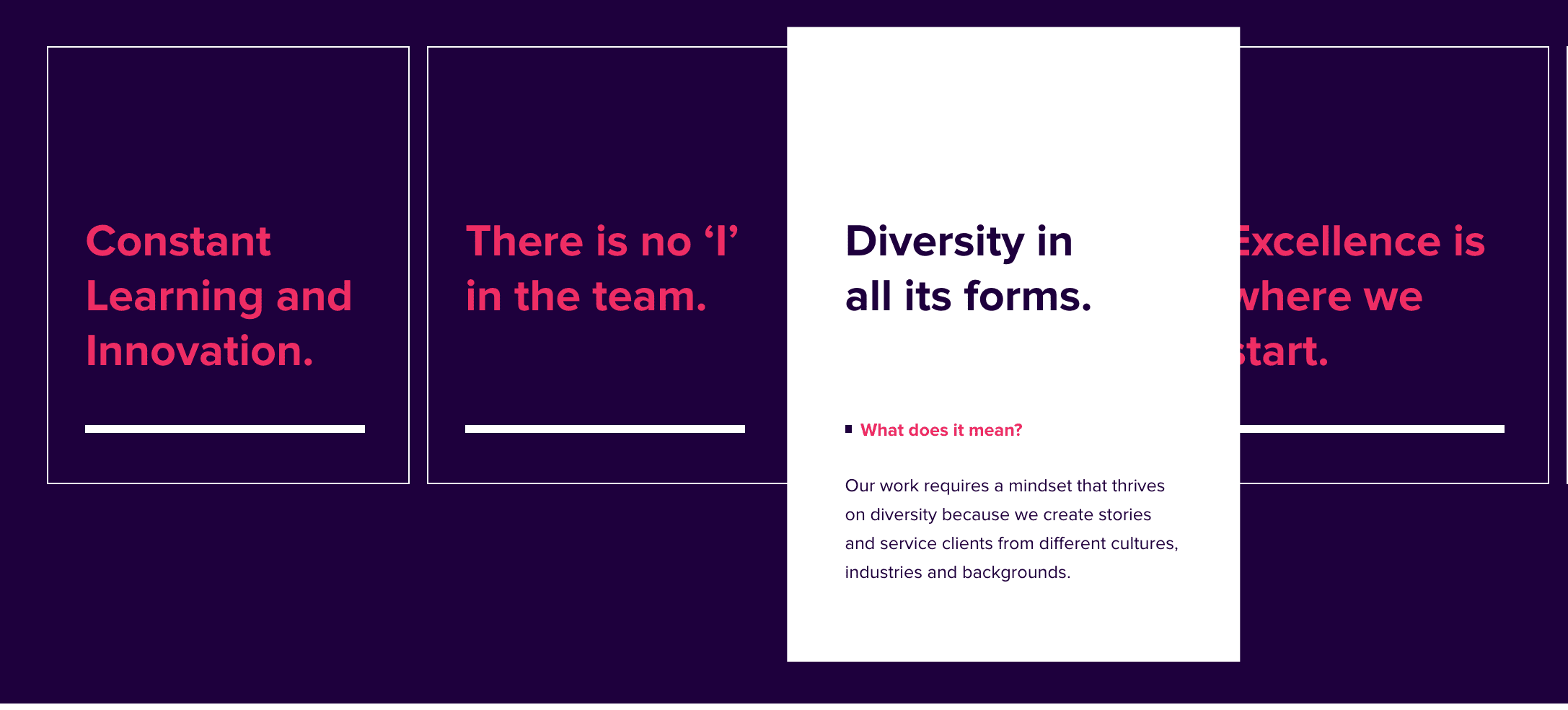
Your core values are similar to your mission statement. However, they may go into more depth than your mission statement. We recommend that you develop at least three core values, which you can share with your customers on your website or present to your marketing team, so they know how to guide your identity.
At ELMNTL, our core values are something we strive to achieve every single day. These core values show our clients that we have a defined mission and remind our team why we do what we do.
Brand Personality
A brand personality is a mixture of all elements of your brand identity. When helping a new client develop their brand personality, a common question is, “If your brand were a person, whom would they be?” Is your brand a sophisticated world traveler or a family man who wants to turn his children on to new experiences and cultures? Is your brand a celebrity like George Clooney or just your average Joe? Figuring out your brand’s personality can help your marketing team understand to whom to market your business and what voice to use to convey your brand message.
Brand Voice
Brand voice is similar to brand personality, but it’s the tone you take across all platforms. Your brand voice should be the same across every platform you use so that your customers will identify your brand voice as uniquely yours. Brand voices can run the gamut from authoritative and succinct to witty or punny, depending on how you want your business to be perceived.
Your brand voice should sound like the same person is writing your content, even if it’s a team effort. A good brand voice will resonate with your target audience, and a great brand voice will create instant brand recognition among your customers. They should be able to tell whose content it is without seeing your brand name.
Brand Positioning
Brand positioning is another essential element to include in your brand guidelines. Your brand positioning tells your customers why they should do business with you instead of your competitors. What makes your brand unique? Why is your brand better? You may be one of twenty Italian restaurants within a 5-mile radius, but you make your pasta from scratch, and many competitors don’t. Include that in your brand positioning, so your customers know what sets you apart.
Brand Strategy
Finally, you’ll want a good brand strategy to summarize your goals for your business. What are you hoping to achieve by marketing your business? Everyone wants to increase sales. However, you may have a greater mission. Your service or product may address a problem that your customers face. Your brand strategy might include the statement that you want to make your customers’ lives easier by solving that problem.
Another element of brand strategy is recognizing your competitors and convincing customers that you are a better choice. Learning what your customers find appealing about your competitors can help you focus on what elements of your business you need to promote. This includes similarities to those businesses but also what sets you apart.
In Conclusion
A brand guide is essential to sharing your brand’s mission with the world. Whether you have one waiting in the wings for your marketing team to follow or you’re just beginning to cultivate your brand’s identity, the marketing experts at ELMNTL are here to help.
Our team of experts can develop a professional brand strategy and guide for your business to stop users in their tracks and get them to listen to your messaging. In fact, we have a unique process for our branding projects that will help to eliminate the fear of the unknown. If you’re ready to start creating a brand strategy and guide for your business, contact the marketing experts at ELMNTL today!
The post Creating a Brand Guide: Essential Elements and Benefits for Your Business first appeared on ELMNTL.
]]>The post Branding Process: The Good, the Bad, and the Fear first appeared on ELMNTL.
]]>Most leaders approach a new branding/rebranding project with a healthy amount of fear. They don’t always voice their concerns aloud, but I can usually spot them. Nervous smiles, repeated questions, asking how many versions they’ll receive. At this moment, they are looking for certainty in an uncertain process.
That fear (like so many fears in life) is rooted in the unknown. They’re walking away from an existing identity that no longer serves the organization well but is known and understood. They know how it works and where it’s clunky. They feel the emotional connections that have been built over time.
And they know nothing of this new identity. The one yet to be created. It’s still a dark, unrevealed concept in the future.
This fear is what drives questions like, “how many versions and how many revisions will we get?” They are an attempt to de-risk the process, but these questions don’t achieve their goals. When limited capital and energy are divided, there is always less impact, less polish, and less potential. So asking for more versions may result in a number of deliverables, but it always reduces the quality of those delivered.
The Broken Approach
We’ve been working on a different approach to solving these issues. This new approach solves two fundamental problems. First, fear. The ‘what if we don’t like any of the ideas’ uncertainty. Second, it brings the clients along on the journey from start to finish, almost like client-led art direction, without all the terrible moments that a concept like that could bring.
Before exploring the new branding process, it’s worth understanding the old way (and the wrong way). Branding projects commonly begin with an intake questionnaire or workshop. And after that moment, the agency goes dark for five to six weeks, maybe longer. When they reappear, they have concepts to explore and a lot of hope that one of them will work.
This is an inherently dangerous approach. Creative is moving forward with little direction and hopes to arrive in the right direction. The client is not available to help adjust or course-correct along the journey. If the destination is missed, a lot of time has been spent without gaining traction. This is where client/agency relationships usually begin to sour.
The Pulse Approach
Our new branding process, heavily influenced by Bill Kenney at Focus Lab, has been refined to work for our best-fit clients and us. The process is centered around pulses. The pulse is different and effective by understanding two key expectations.
First: Our team delivers work every week. Every single week. Beat by beat, pulse after pulse.
Second: the client understands they are seeing branding work “as it stands” rather than in a polished state. And seeing unpolished work, they agree to respect the process.
Reviewing the branding creative as it stands allows the client to see the direction and provide thoughts, guidance, and adjustment. They get to say, “ooh, let’s explore this more,” or “ugh, no need to chase that idea further.”
The clients that we have used this branding process with rave about the experience. At every step and turn of the journey, we get more input and feedback. Rather than crossing our fingers and hoping things land, we know we’re moving in the right direction.
Understanding that the creative won’t be polished initially has other benefits. It allows us to explore more ideas without hiding behind surface polish to make the concept look better than it is. Let’s explore a large number of directions without worsening the quality.
This branding process also fits a variety of personality styles. People who are more nervous about bigger ideas can explore those ideas safely and test a number of variations. And for those who like to explore wildly, they can rove far and wide and then return to what fits best.
Journey Bravely
We suggest implementing a pulse process if you’re exploring a branding or rebranding project. Below we’ve sketched a loose overview of what it looks like and how it works:
| Pulses | Time |
| Kickoff | — |
| Workshop and intake | 2 weeks |
| Creative direction | 1 week |
| Explore, round 1 | 2 weeks |
| Explore, round 2 | 1 week |
| Explore, further rounds | 1 week |
| Refine, round 1 | 1 week |
| Refine, round 2 | 1 week |
| Refine, round 3 | 1 week |
| Refine, further rounds | 1 week |
Check back next week as we dive into what goes into a brand guide and why your business needs one. If you are ready to get started on branding or rebranding for your business, our branding agency is ready to get started today.
The post Branding Process: The Good, the Bad, and the Fear first appeared on ELMNTL.
]]>